
Chemical, Membrane, Biological : Which is the best for Water treatment?
All water treatment systems aim to remove impurities from water so the water can be released (discharged) or reused in other processes.
Different industries require different qualities of water, producing wastewater and liquid effluent containing various concentrations of impurities.
The types of impurities and the saturation (amount) of impurities in the liquid define the best treatment technology and approach.
Thus, the question of whether chemical, membrane, biological, or all treatment approaches are best for water treatment is a matter of application.
In some cases, a single treatment is all that is needed to treat water to the specified quality. Still, multi-stage treatment is necessary when the impurities in the water are diverse, and no single treatment achieves the quality of water you need.
Chemical water treatment
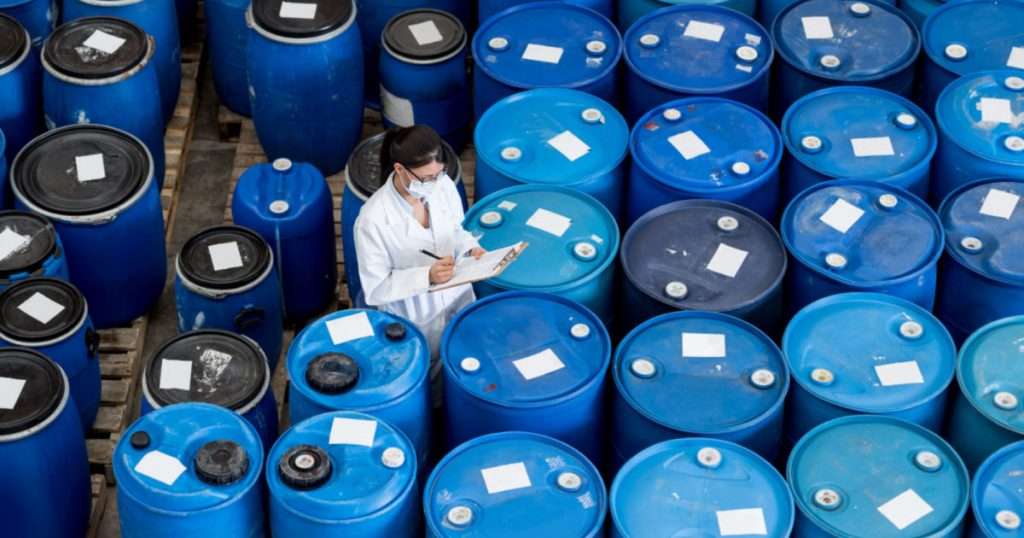
Chemical water treatment is an old-fashioned approach, with chemical precipitation, chemical disinfection (usually with chlorine, chlorine dioxide or ozone depending on the application), and ion exchange the most common.
At Membracon, we have moved away from chemical treatment in favour of Reverse Osmosis (RO), bioreactors (MBRs) and membranes.
Chloramine and chlorine are most commonly used to disinfect water – an alternative to this is Ultraviolet Disinfection (UV).
Chemicals contaminate water in low concentrations, but nether-the-less, this presents environmental and safety concerns. Chemicals have a high carbon footprint, and inorganic chemicals do not biodegrade under normal conditions.
Membrane water treatment
Membranes are clean, green and safe, capable of treating water to a precise specification through a series of filters. More traditional treatments include the use of harsh chemicals; membranes are physical filters that use no chemicals.
Reverse Osmosis
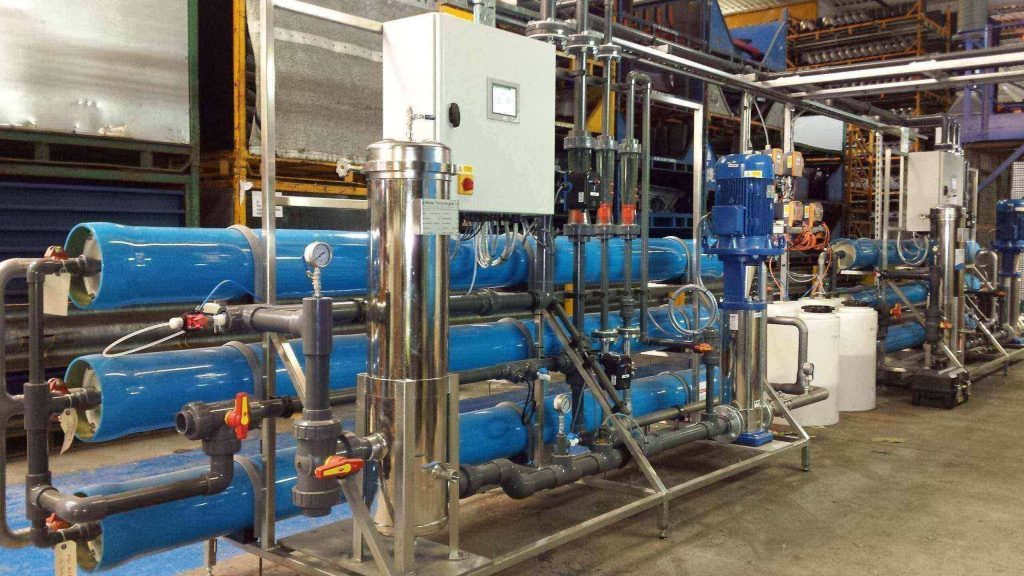
RO systems are the most common. They work by jetting water at pressure through semi-permeable membranes, removing impurities as the water passes through.
The membranes used include:
- Microfiltration (blocks bacteria and suspended solids for fuel refinement, wastewater treatment and separating oil/chemical emulsions)
- Ultrafiltration (also blocks viruses)
- Nanofiltration (blocks 50-90% of monovalent ions and organic molecules and salts, making it ideal for treating hard water)
Reverse Osmosis is widely used to treat water to precise specifications, like the finishing water used in the automotive and aerospace sectors.
Biological water treatment
Biological treatments remove organic impurities from water. In a biological system, organic matter, nitrogen, phosphorus, and other impurities are eliminated by microorganisms, carefully selected and cultivated with precise microbiology.
The most rudimentary biological treatment is activated sludge. A cleaner, greener and more modern system is a Membrane Bio-Reactor (MBR).
MBR – Membrane Bio-Reactor
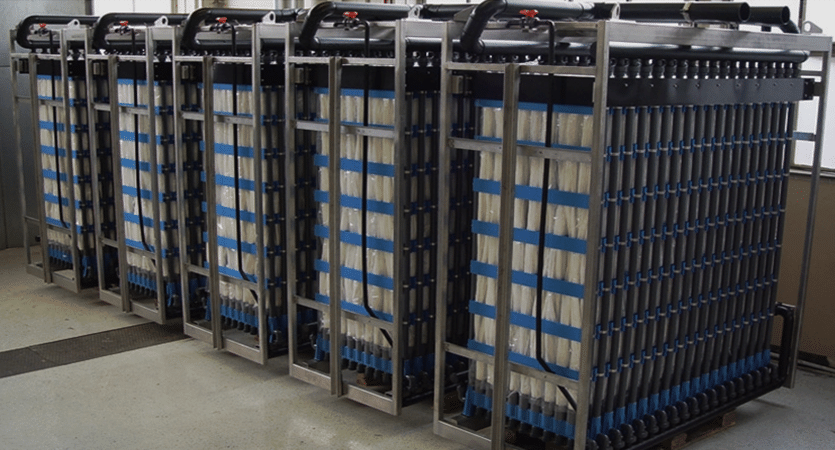
Compared to activated sludge, a Membrane Bio-Reactor has lower waste, higher-quality effluent and no need for secondary clarifiers. The system is self-contained, requiring little intervention and supporting flow rates up to 2,000m3/day.
The living biomass in the membrane biodegrades contaminants, assimilating them into the culture (in other words, converting them to food).
The biological wastewater treatment process is coupled to a membrane filtration system, with the membrane system polishing the water. The result is high-quality treated water, suitable for reuse in industrial applications.
Summing up
Chemical water treatment is old-fashioned, easily replaceable with Ultraviolet Disinfection (UV) for disinfection and membranes for purification.
Reverse osmosis and membrane bioreactors offer a green, clean, low-maintenance water treatment solution for large-scale filtration and purification.
Find out more
To find out more about the biological, membrane and chemical wastewater treatment processes discussed in this article, feel free to contact us.